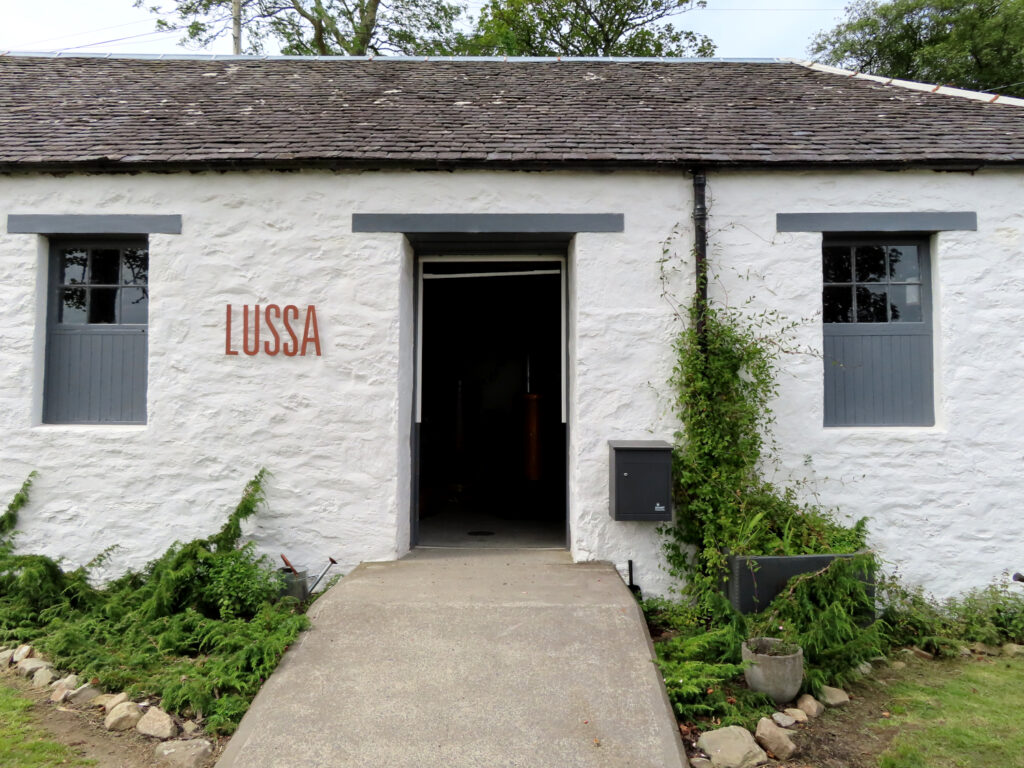
Claire from Lussa Gin gave us a tip-off about the Islay Woollen Mill, which is just off the main road to Port Askaig.
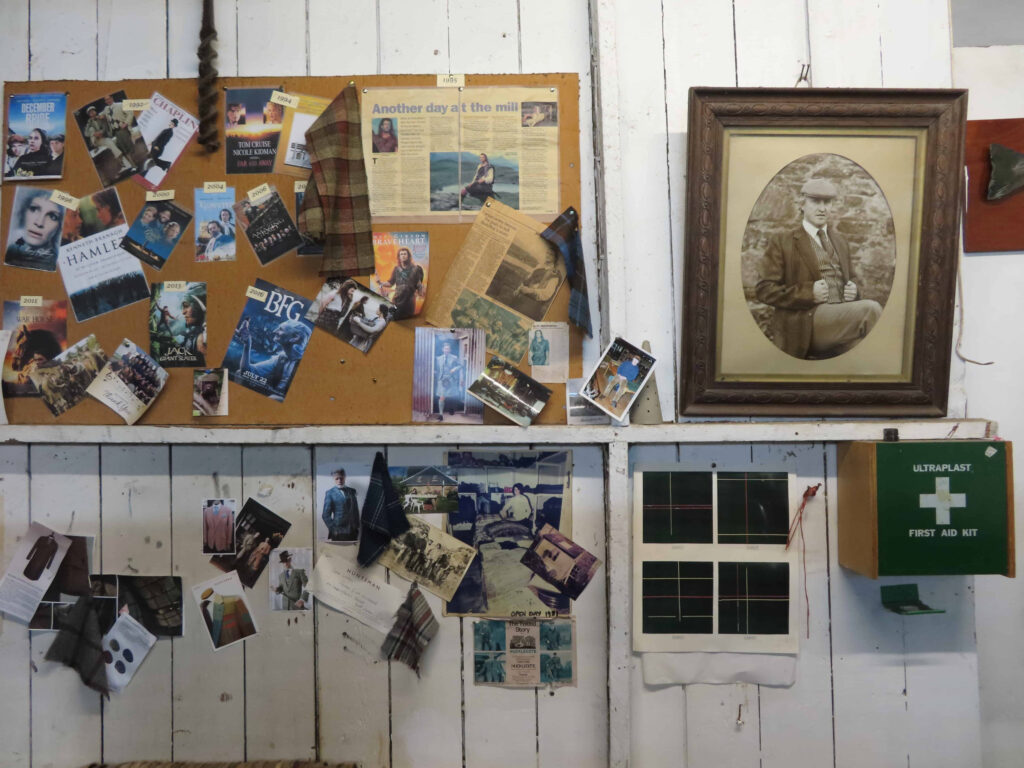
Started in 1883 and still going strong, the mill supplies high-end tailors in Savile Row and further afield.
It is most famous for weaving the tweed used in Braveheart and other big name Hollywood productions. Their fabrics are produced on two traditional Dobcross looms and shipped all over the world.
The vibe inside is distinctly down-to-earth – an old building with lots of character filled with old looms, yarn cones, rolls of fabric and weaving paraphernalia, all higgledy-piggledy.
Lucky visitors can get an impromptu tour from the owners and try out the big scissors.
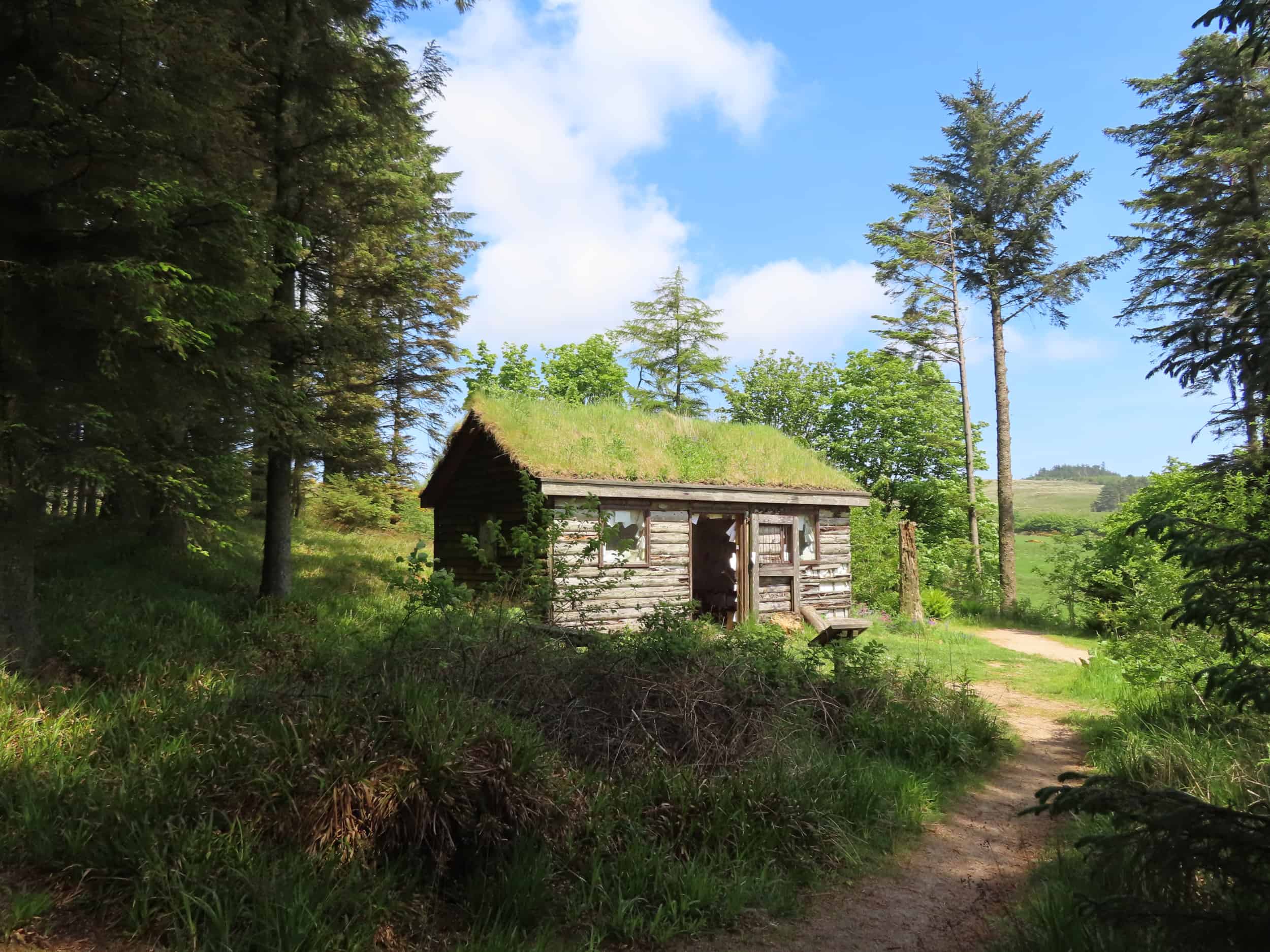
This is Eas Mor Library on the isle of Arran. It’s a little log cabin in a forest beside a waterfall.
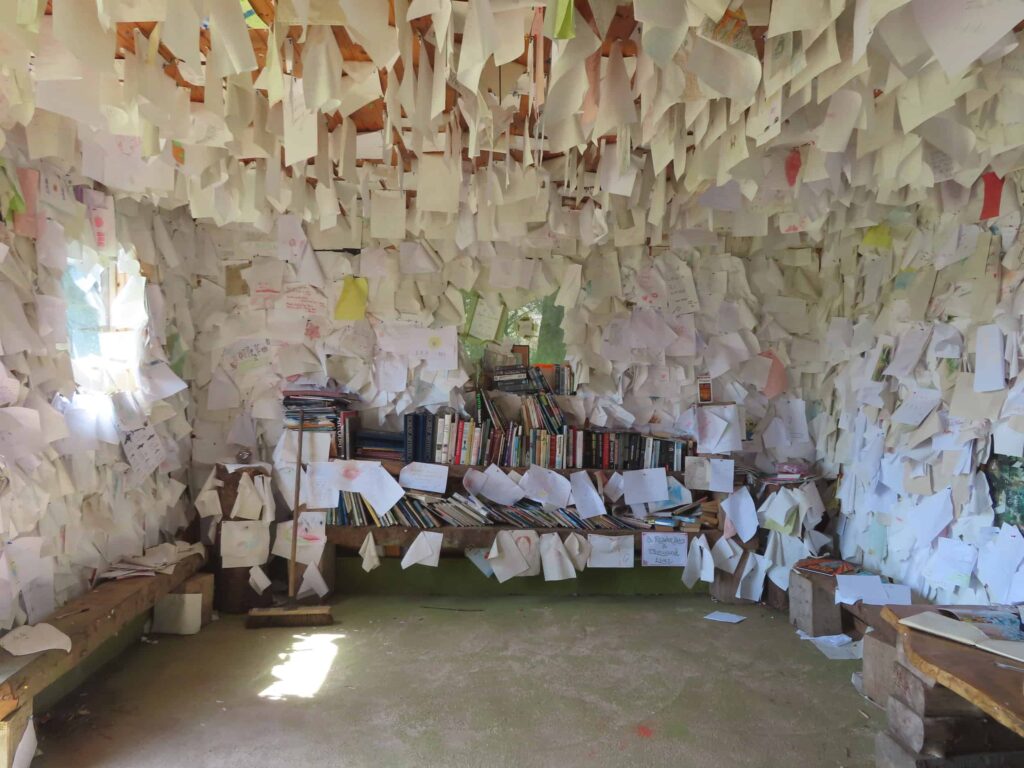
The library is filled with books and messages left by visitors over the years.
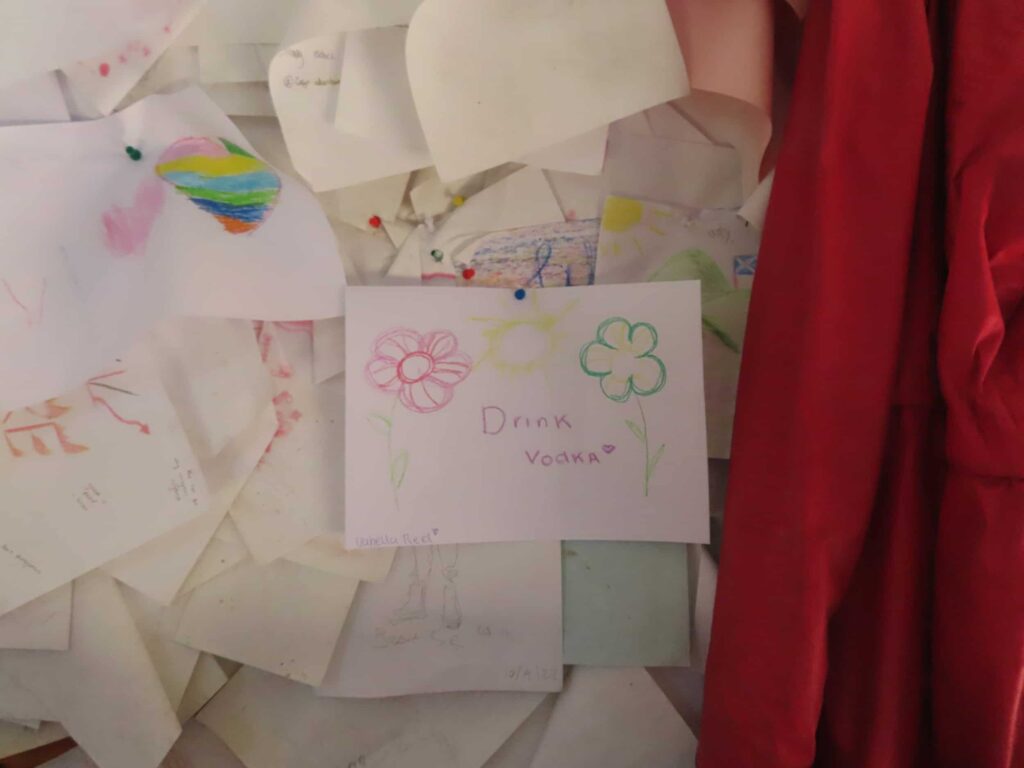
There are drawings, messages and all kinds of wisdom, from inspirational quotes to ‘We saw a jellyfish’.
It was created by Eas Mor Ecology who are working hard to enhance the beautiful area around the Eas Mor waterfall.
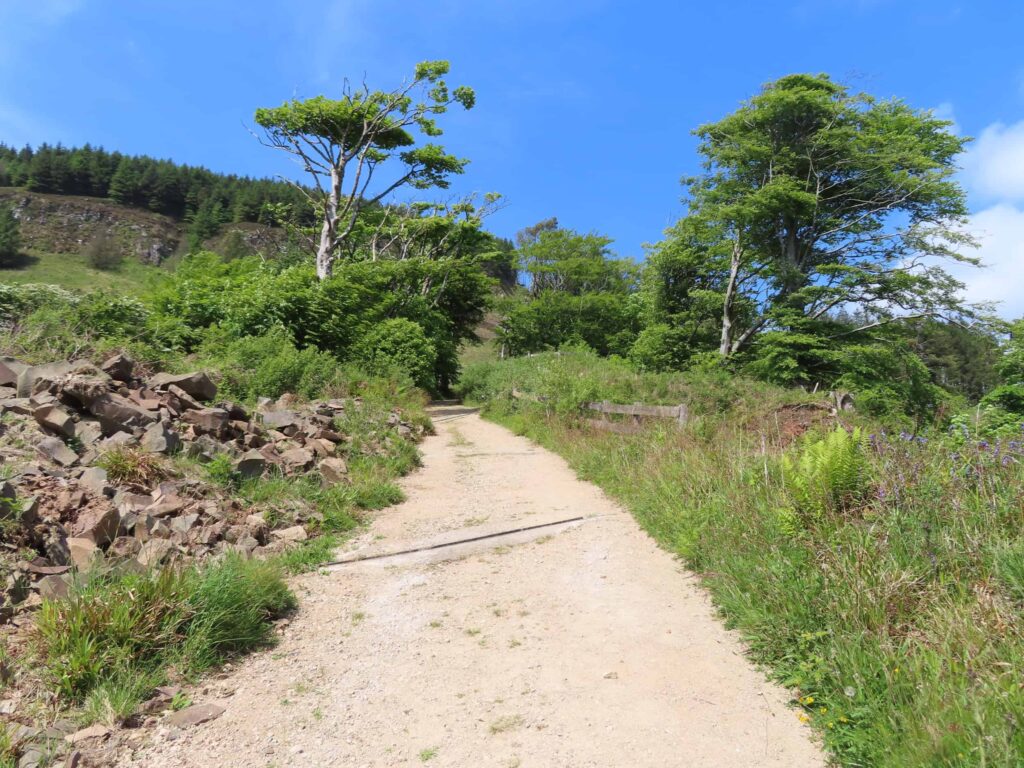
It’s a steep (but fairly short) hike to the top on well-kept paths. There’s a circular route, which is also a steep hike down in places, depending on which route you take.
Eas Mor is 1-2 miles from Kildonan in the south of Arran. There is a car park and a bus stop near the entrance just off the A841. A cafe is planned for the summer.
Following on from A Day on Jura: part 1 – Nothing To See Here. Once you’re out of Craighouse (the main town on Jura) there’s virtually nothing there, and what is there is often out of bounds.
Barnhill, where George Orwell wrote 1984 is beyond the end of the public road, as is Corryvreckan, the third largest whirlpool in the world. Jura is covered in private estates, so we couldn’t see where the KLF burnt a million quid (YouTube) either. Ah well!
At the end of the road we did find Lussa Gin, a gin distillery run by three local women. Claire, who kindly gave us a tour first came to Jura with the KLF. There’s not much work for women on Jura, so three friends started Lussa Gin.
The botanicals are all grown locally (right outside the door!) and it tastes gorgeous.
It’s a horse box converted into a tea room with a selection of freshly-made cakes and an honesty box, run by local school kids. A lovely place to stop before the ferry back to Islay.
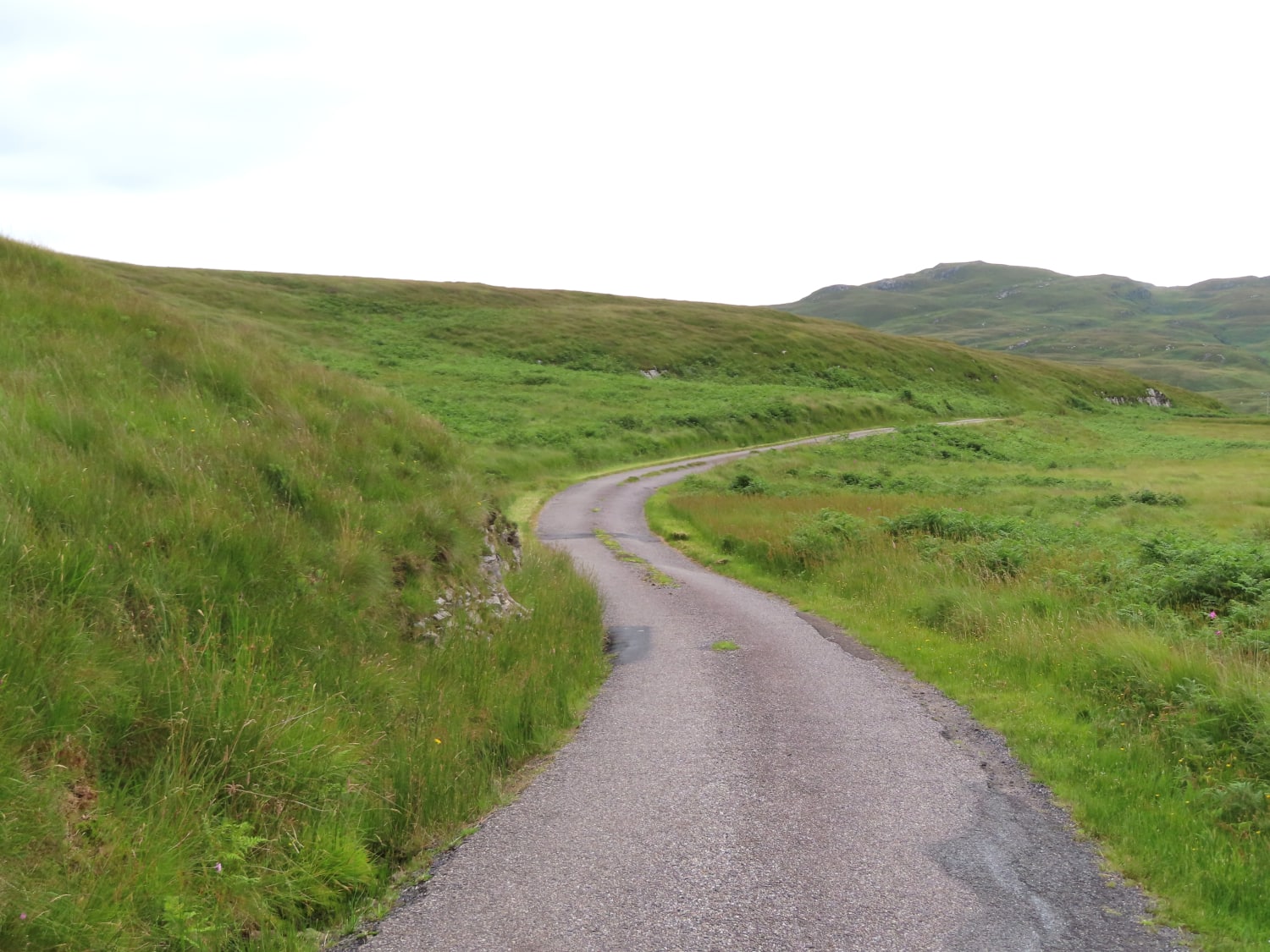
This the main road on Jura that runs from the west coast to Ardlussa on the east. There isn’t a lot to see, but the wilderness is part of its charm. George Orwell wrote 1984 here, calling it an ‘un-gettable’ place.
What you can’t miss is ‘the Paps’ of Jura. These three mountains are visible for miles around, and make the island’s skyline easy to identify from any direction. Even though they are omnipresent, they are also strangely out of reach.
Jura is also famous for having more deer than people (around 7,000 deer v 200 people), so there’s always that.
Compared to the other tidal islands I’ve visited (Burgh Island, St Michael’s Mount, Cramond Island) the walk to Oronsay was a long and not particularly enjoyable schlep across wet sand and standing water.
I’d love to say it was worth the walk, but I was so fed up I turned back as soon as I got to the waymarker. Sorry Oronsay! Another day perhaps.
Colonsay is a small island (population 125) in the Southern Hebrides (part of the Inner Hebrides) off the west coast of Scotland. The ferry runs daily from Oban, or from Islay twice a week in summer.
There is a bookshop, a microbrewery, two gin distilleries and Colonsay house and gardens (closed when we visited). It is also covered with beautiful quiet beaches and has its own species of bee.
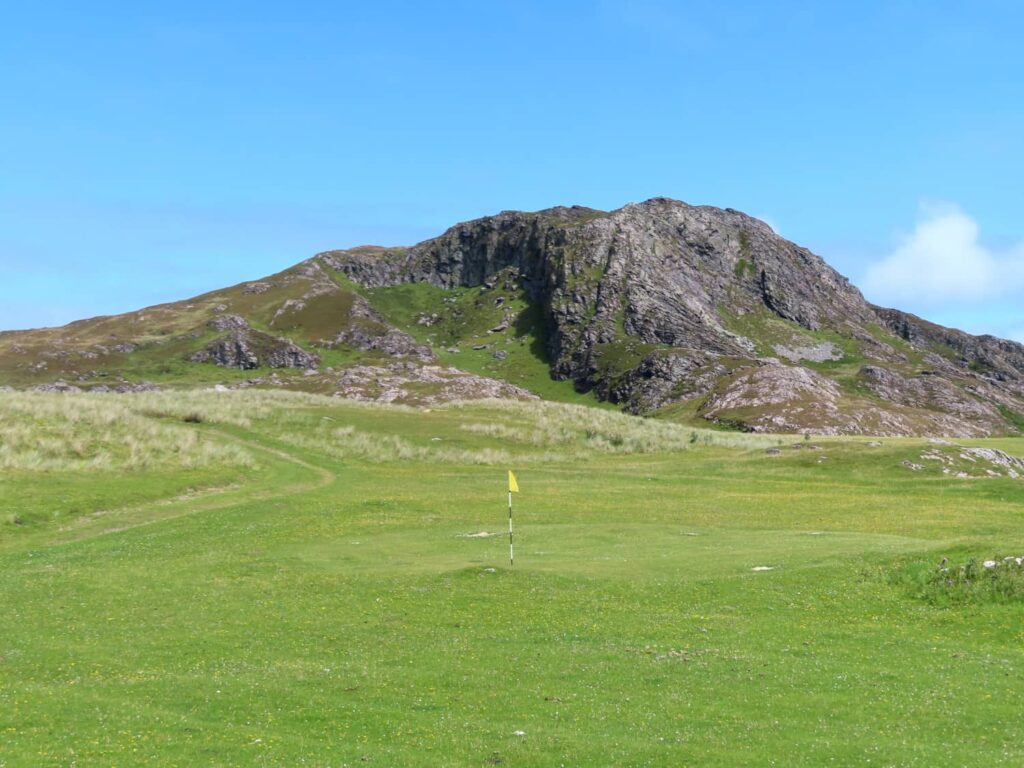
We hung about on Colonsay Golf Course, which has a fantastic setting, like the Bunabhainneadar tennis course on Harris. It operates via an honesty box, and local rules allow “a free drop for balls disappearing into rabbit-holes or taken by the ravens”.
It was covered in relics of something or other and led down to a deserted bay.
After a trip to Oronsay (of which, more later) the last stop was something to eat at the excellent Colonsay Pantry before the beautiful journey back to Islay.
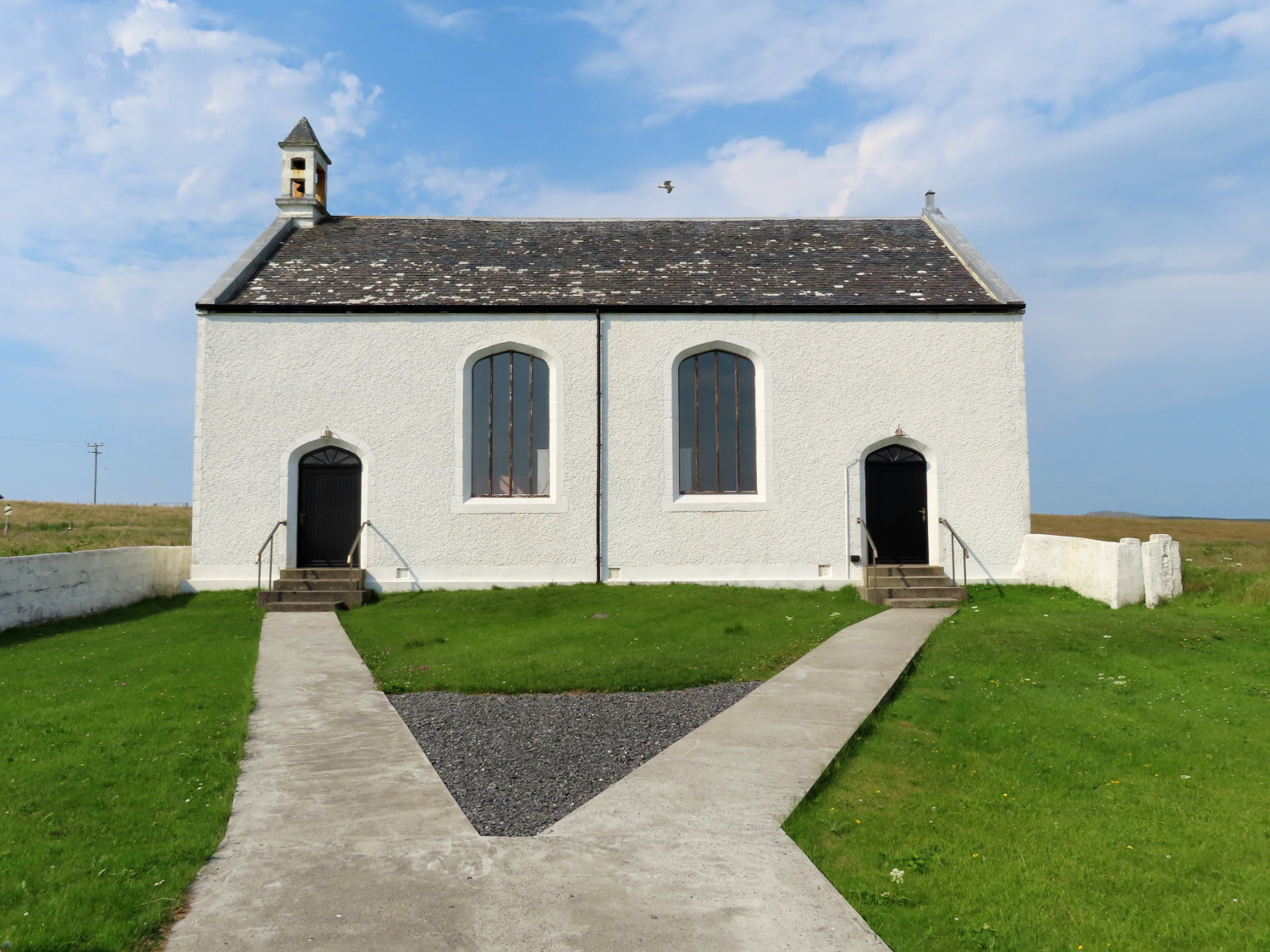
Portnahaven Church was designed by Thomas Telford and built in 1828. The two doors are reputed to allow the populations of Portnahaven and the neighbouring village of Port Wemyss to enter separately and remain segregated when inside. Very Christian!
It is one of the best remaining examples of a ‘parliamentary church’, part of a wave of church-building (funded by Parliament) designed to better serve churchgoers in remote areas. Thanks Maraid for the tip-off.
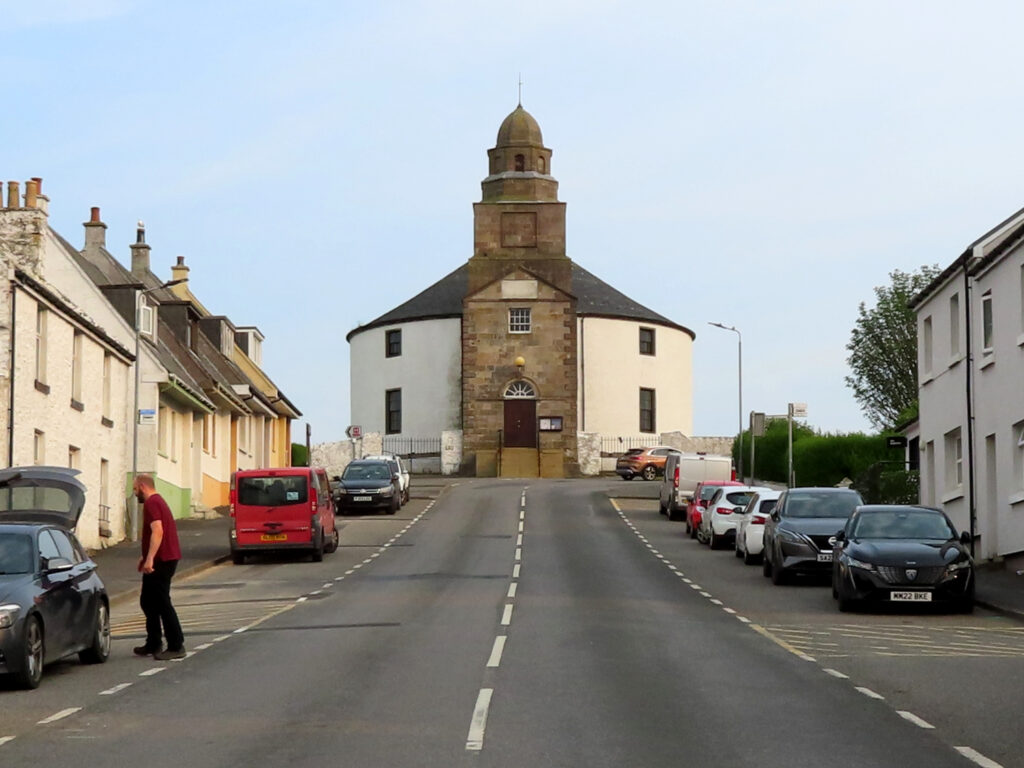
Kilarrow Parish Church, more commonly known as The Round Church sits at the top of Bowmore’s main street. It was built in 1767 and is one of few round churches in the UK. The story goes that it was designed to be round so the devil couldn’t hide in any corners, but this seems to be more fiction than fact.
The church is not usually open apart from Sunday mornings, but you can arrange a visit by contacting the parish clerk on the number at the entrance.
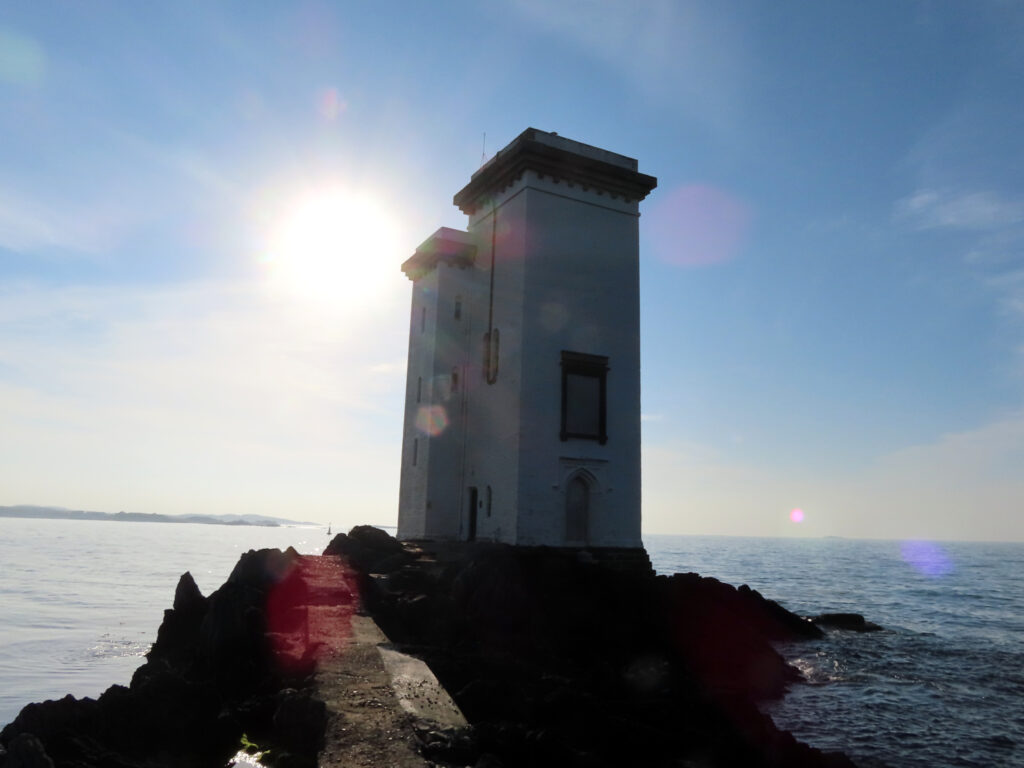
Carraig Fhada Lighthouse on the Mull of Oa is a beautiful thing from any angle. We visited at 7.30am on the hottest day of the year.
It is Scotland’s only square lighthouse, and was commissioned by Walter Frederick Campbell, the Laird of Islay, in memory of his wife Lady Ellinor Campbell who died young in 1832. There is a beautiful dedication to her on one side of the lighthouse.
You can walk across the little path to get right up close (except at high tide). The lighthouse itself is not usually open to the public.
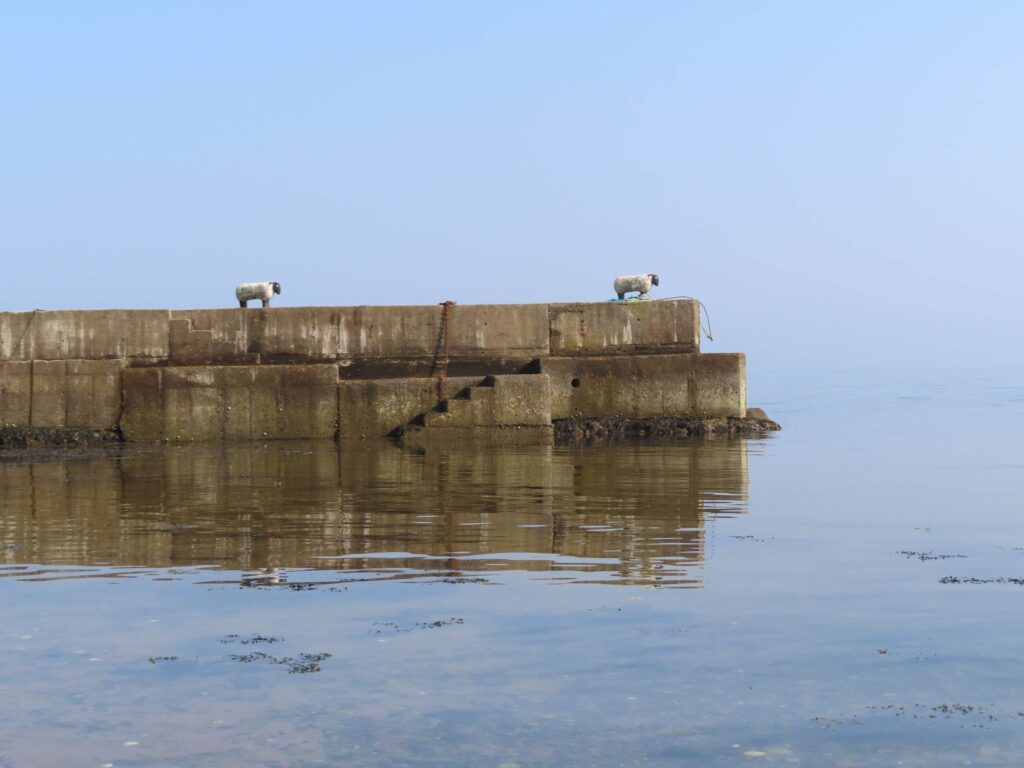
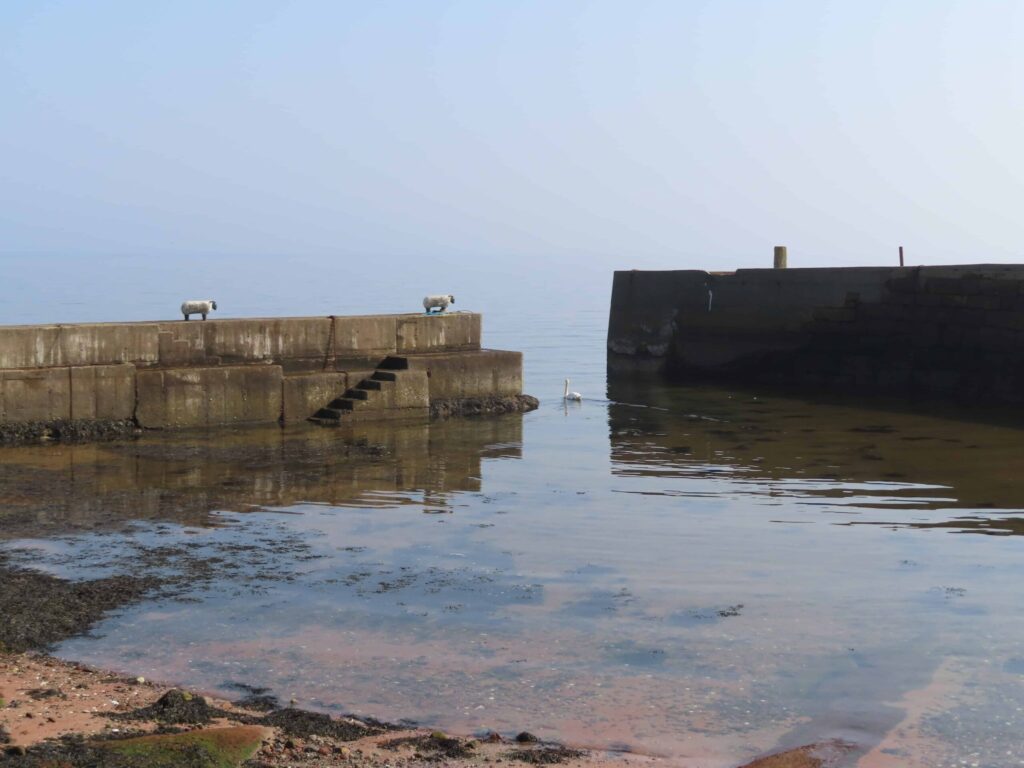
I found this idyllic harbour last week in Corrie on the Isle of Arran.
Corrie lies on the north-east side of the island. It has two harbours – this one is known as Sandstone Quay because of the sandstone that was quarried locally and shipped from here.
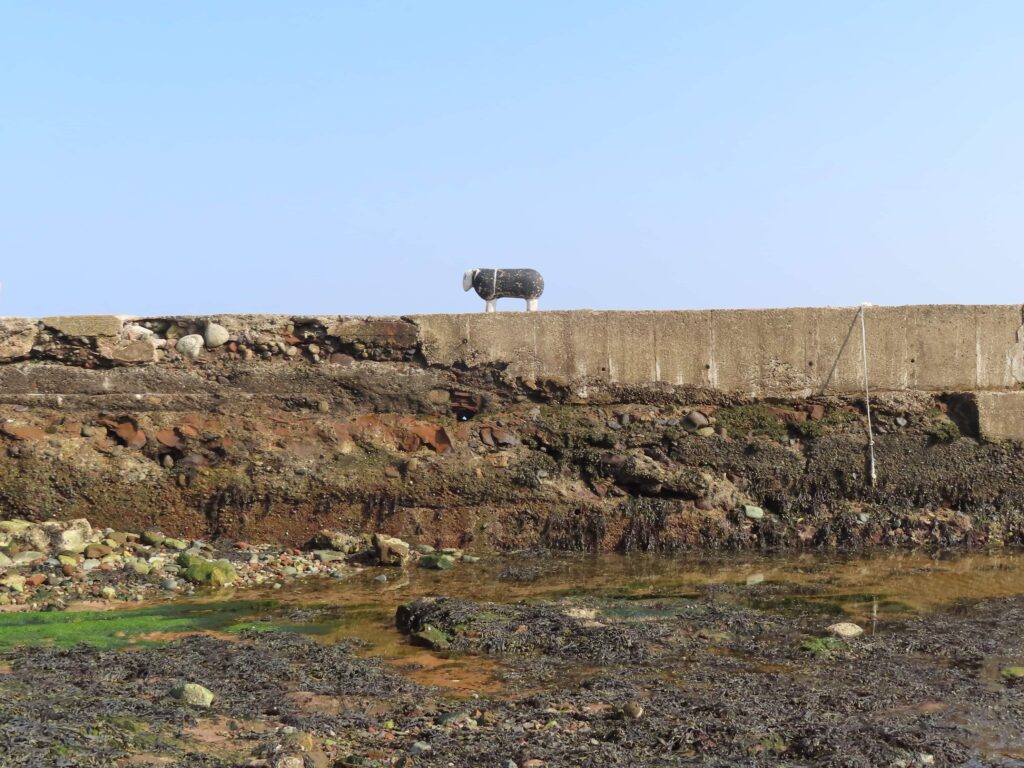
The sheep came from the Glasgow Garden Festival, and are a fun presence. There is also a lot going on rock-wise, if you like that kind of thing (I do).
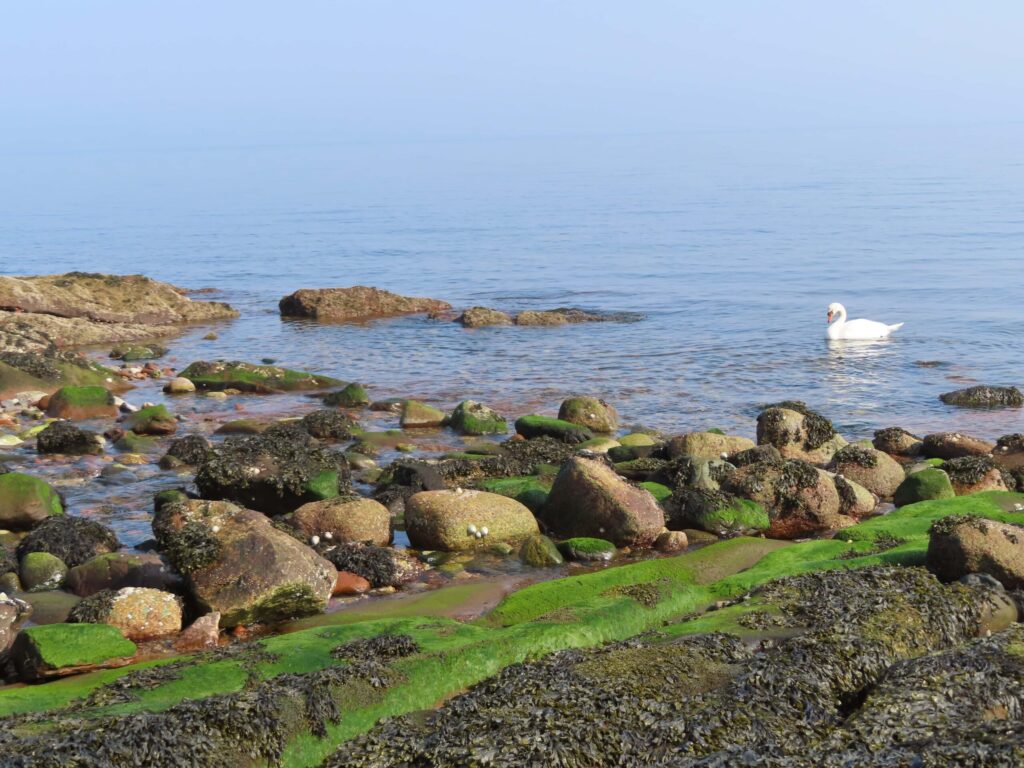
The shoreline is full of plants, lichens, birds and sealife. The textures and colours are amazing.
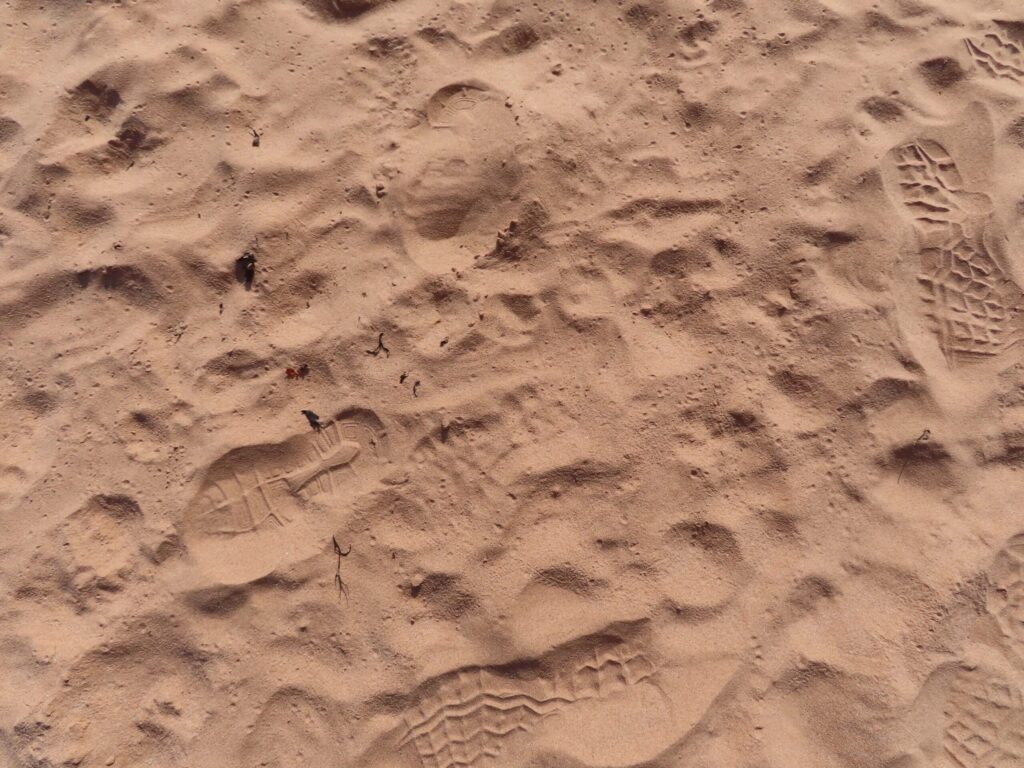
The colour of the sand is warm and inviting. It reminded me of butterscotch Angel Delight.
Haven’t been out much recently, so I’ve been travelling the world on a small screen.
Humberston Fitties, historic plotland developments on the bank of the Humber in Cleethorpes, lovingly documented by Seagull Swamp.
How curling stones are made – quarried from Ailsa Craig, a well-known landmark off the west coast of Scotland, and made to Olympic standard by one company in Mauchline – photos by Andy Buchanan
The Hermit of Treig – a great documentary about Ken Smith, who has lived alone off-grid on the shore of Loch Treig for the last 40 years. Incredible for his hardiness and indefatigability, I was fascinated with his thorough approach to record-keeping and the daily admin of being a hermit. (Not currently available on iPlayer but it has been repeated a few times).
The story of Clarion Clubhouses, founded by socialist organisations for the benefit of walkers and cyclists visiting rural areas. Found via a Guardian article about the last Clarion House in Lancashire, which I would very much like to visit.
Slow Ways – help create a national walking network.